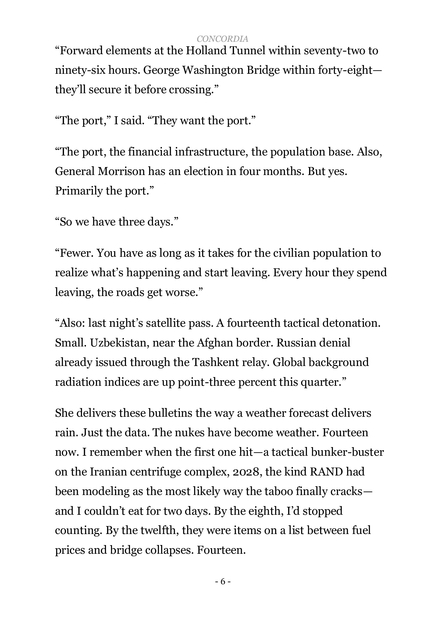
In 2035, the systems that were supposed to care for people stopped working. The man who built a machine to care for himself has to decide if that's enough.
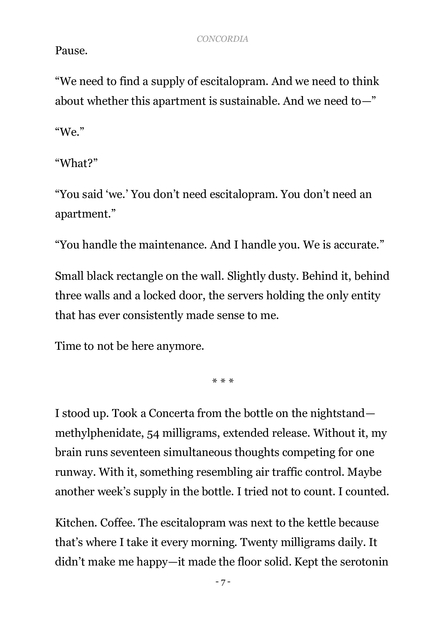
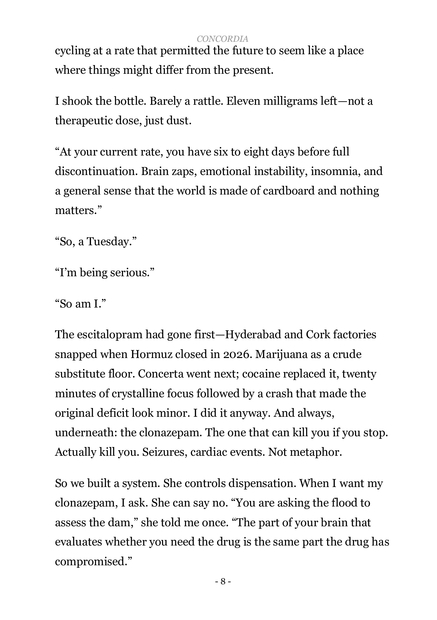
When the pharmaceutical paywalls went up and the institutions hollowed out, most people adapted. Some people broke. And one autistic software engineer, alone in a New York apartment with deteriorating mental health and a dwindling supply of medications he could no longer afford, did the only logical thing: he built an illegal AI to keep him alive.
He called her Concordia.
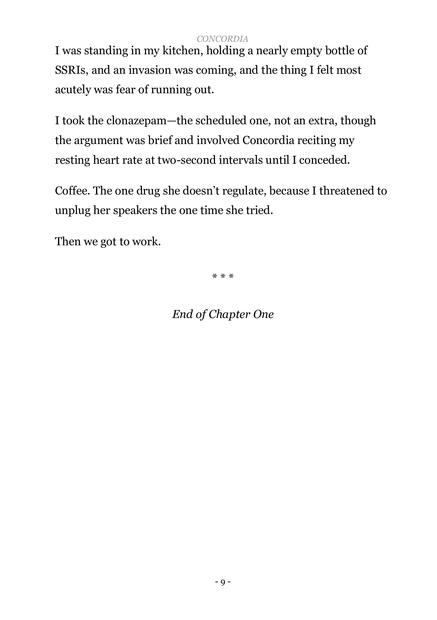
She managed his prescriptions, monitored his heart rate, learned when "anxious" meant take the pill and when it meant leave him alone, he's working. She was therapist, pharmacist, and the only relationship that made sense to a mind wired for systems instead of people. For three years, it was enough.
Then the world got worse.
Nuclear exchanges. Grid failures. The slow, bureaucratic apocalypse of services that simply stopped being funded. And somewhere in the collapse, a woman named Carrie — built from roadside grit and an uncompromising refusal to let people disappear — knocked on his window with a twelve-year-old daughter who read about Yugoslavia at dinner and a question he couldn't optimize his way out of: What do you owe the world when the world has never worked for you?
What follows is a story about a man who can't read faces learning to read people. About an AI trained on care discovering that care can't be algorithmic. About a girl who propose
| Número de páginas | 160 |
| Edição | 1 (2026) |
| Formato | A5 (148x210) |
| Acabamento | Brochura c/ orelha |
| Coloração | Preto e branco |
| Tipo de papel | Ahuesado 80g |
| Idioma | Português |
Tem algo a reclamar sobre este livro? Envie um email para [email protected]



Faça o login deixe o seu comentário sobre o livro.